Saturday, February 24, 2007

COCP Newsletter No 18


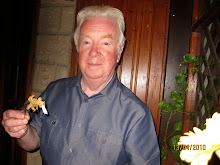
Hello from Cornwall. As usual, the picture has nothing to do with anything. It shows me and five grandchildren on my birthday last year.

Although things might seem very quiet, we have been getting on with the project. Since the beginning of the year we have uploaded:

1851
West Looe Joan Oliver & Frances Kenshole
Redruth Asylum Joan Oliver & Frances Kenshole
Saltash (completion piece) Moira Hurst & Ken Hosking

1861
1579 (completion piece) Shirley Franklin & Maxine Cadzow
1584 (last piece) Carrol Parfait, Maxine Cadzow & Marion Paul

1871
2224 St Stephen John Warren & Julia Mays
2257 Newlyn East Faye Ammermann & Jan Lewis
2318 Redruth Caroline Buckland & Ken Hosking
2338 Penzance Paul Archie Courtney-Williams, Frances Kenshole & Carrol Parfait

1881
2297 St Columb David Trounce
2303 St Austell David Trounce
2321 Wendron Althea Johnson
2323 Wendron Althea Johnson
2324 St Keverne Althea Johnson
2325 St Keverne Althea Johnson
2326 Breage Althea Johnson


In the pipeline are 7 1871 pieces and half a dozen 1881. Redruth 1851 was a very large piece - over 10,000 records - and puts the 1851 within a couple of percent of completion.

Free Census rebuilt its database on the 21st February and we have now contributed 1.5 million records - some 16% of the total.

The online parish register project continues to grow - nearly 480,000 records online. It is now possible to upload all or some of the details from post-1837 marriage certificates using an online submission form. Forms for births & deaths will follow. A number of volunteers are busy inputting the Phillimore marriage lists and extraction of hatches, matches & dispatches from the West Briton transcription project continues apace.


Sunday, February 04, 2007

NWOCP Newsletter No 5

This is aimed at the 1841 volunteers, but it is mostly valid for any year.

When a parish spreadsheet comes in, I reformat it as .csv and load it into FCTools. The diagnostic package details the errors & warnings. Errors have to be fixed, but warnings may not be serious enough to do anything about. But I usually do them with the 1841 parishes as they are so small. I then marry them to a data file and produce a zipped file for checking. I load this into the checking software to see it loads OK and then send it off to the checker.

There is only one checker for the 1841 - our web site host - John Pope. He produces a checked zip, often accompanied by colourful comments, and sends it to me.

I load this into Valdrev and validate it. The output zip from Valdrev then goes back into FCTools for a final burst of corrections. The refined output zip is sent to John, who turns it into html and uploads it to his web site.

When a whole Hundred is done (we have done two so far), I run all the validated zips back through FCTools to produce a series of spreadsheets. I stitch these all together and run the resulting giant spreadsheet back through FCTools to produce a final validated file. This goes back to John for him to create the html. Once I have looked at that and re-assured myself that all looks well, I send the data zip off to a guy name Bill O'Reilly. Amongst other things, he looks after the upload to Free Census side of things for me. You need to be a Windows user to do that and I am not one of those.

Common errors. I am not saying that you all make them or that anyone makes them all - but they come up again and again.

1. Do not use question marks or any other such characters anywhere except in the notes Col Y.

2. Make sure that all households have a schedule number - zero. Make sure that all uninhabited dwellings & public buildings have their own record complete with sched zero.

3. No entry must be on more than one line. If you cannot abbreviate an address for instance onto one line, then put some of it in the notes column.

4. Stick to the plan on folio numbers. Pages without a number take that of the preceding page.

5. If you are uncertain of anything - flag it up.

6. Addresses must only be entered against a schedule. They must not appear in the middle of a household. If a household straddles a page break; backtrack to the previous page and enter the address there.

7. Col T - county of birth - must have a 3-digit code from the table in the Free Census Field descriptions.

8. There is no need to use capitals or put the "y" after ages. You must put "m, w or d" if they are applicable though.

9. All records must be transcribed, including those crossed out.

Don't forget to keep an eye on the blog on http://medeschole.blogspot.com/

Saturday, January 20, 2007

A Gigantic Whinge

The aim of Free Census is to provide an accurate transcription of the pages of the Enumerators' books. To that end we transcribe "as is". This is the so-called Golden Rule of Free Census. Just by chance the other day, I noticed a little girl called Olive E Smith, born in Lydiard Tregoze. But the Enumerator had written Oliff E Smith born Liddiard Tregooze. That is what the transcriber should have written.

When I start new checkers off, I always state what seems obvious to me. Checkers must try and identify AND then fix the transcriber's errors. In the case of Oliff, the checker detected the error and left me a note. This is NOT correct practice. The checking software allows you to do many things and all but one field can be corrected. Only the transcriber's notes cannot be edited by a checker.

My final whinge for today concerns communication. Emails must be one of the easiest and fastest systems of global communication yet invented. Why then, do I not get regular emails from volunteers? All you have to do is drop me an email every month or couple of months telling me what you are doing. It would be nice if you had a subject line - NWOCP 1287 would tell me at once what you are working on. For transcribers, just say your piece has 253 images and you are working on image 157. For checkers it can be more accurate. Under Options you can select review progress. This tells you exactly how many records you have, how many you have done and how many are left. You just cut and paste this into your email.

Finally, if you don't want to do what you have volunteered to do - then please, oh please, tell me. There will be no hard feelings. Although the task is quite easy to carry out, it can be a pain. Lots of people drop out - for all sorts of reasons. Just let me know and return the disc.

Tuesday, January 02, 2007

Occasional rant by Blog owner!

My wife and I have a newspaper each every morning, which we read over breakfast. Most mornings produce a rant from Michael, which she endures politely. I have decided to have an occasional rant on my blog. If you don’t want to read it, don’t. If you wish to comment, be my guest.

A sneaky announcement on December 29th (after the New Year holiday had started) revealed that the EU had wimpishly given in to the demands of the US government over transatlantic flight passenger information. Well, I say announcement, but in fact it was only revealed after a Freedom of Information release, forced by the Tories.

Under this deal, airlines will provide the US Government with 34 pieces of information on people flying into the USA. This information will include name & home address; email address, telephone number and credit card details. This last will not only show which card has been used, but will allow the US government to access the credit card account.

Although the justification for this invasion of privacy is anti-terrorism, the US Government reserves the right to look for other sorts of alleged violations of US law. Not EU law or British law – US law. Some two dozen US agencies will have access to this data and the US Government reserves the right to share information with “foreign” governments.

In my opinion the EU should immediately insist on reciprocity. Every US citizen flying into the EU should have to provide the same 34 bits of information. Plus they should have their fingerprints taken, pictures taken and be finally and ritually humiliated by having to provide a DNA sample. The EU should also insist on a visa, although we will waive that under a visa-waiver scheme. Sound familiar?

However, the EU is pretty gutless at the best of times and the UK no longer has the power to go its own way. But just in case any US readers think their privacy is safe, their government is going to “encourage” US airlines flying into the EU to provide the information anyway.

I have spent many happy times in the USA. I did a rough count the other day; since 1958 I have made over 50 visits to that great country. I don’t think I will be visiting again. Shame

COCP Newsletter No 17

Hello from Cornwall

Here in the southwest of the UK, the day has started off dark, wet & windy. Just like yesterday really. What a difference a new year does make!

Anyway, I hope that you all had a lovely Christmas and wish you all a happy & prosperous New Year.

The world's largest project of its kind (COCP that is) has trundled along during 2006, just like it has during the previous five years. We have just one piece of the 1861 left to do and that is with a checker right now. The 1871 is about 60% done and the 1881 is edging up to 20%. The spotlight of my attention has shifted to the 1851 (sounds a bit naff that). There are 20 parishes or bits of parishes left to do. Most are pretty small and I am hoping that all those working on the 1851 will crack on.

At the beginning of 2006 we had 1,117,534 records uploaded to Free Census - at the end of the year we had 1,454,770. Quite an achievement; my thanks to everyone.

On the wider front, Free Census now has just under 9 million records online with the COCP contributing 16%. A third English county (Wiltshire) has uploaded its first 1841 piece. The Cornish parish register project (C-PROP) has gone through the 460,000 record mark.

NWOCP Newsletter No 4

I hope that you all had a lovely Christmas and wish you all a happy & prosperous New Year.

The world's largest project of its kind (Free Census that is) has trundled along during 2006, just like it has during the previous five years. Our project has done rather better than most of the other English projects. At the beginning of 2006 we had 15,000 records uploaded to Free Census - at the end we have 73,000+!!!! Quite an achievement; my thanks to everyone.

Of course, we have rather more than that on our own web site. Last month we uploaded the first 1841 Hundred. There are only three English 1841 projects and the other two are complete. 1841 parishes are rolling in on a daily basis; I hope that everyone working on the 1861 & 1871 is encouraged by this and will be cracking on!

Our web site is also carrying some returns from outside Nth Wilts as Terry clears his backlog.

Cornish 1851 Project update


Hello folks

Another grandson - the only one bearing my surname!

Here is the status of the 1851 project. If your name is on here and it shouldn't be, please let me know. If it should be on and isn't - let me known. If you are doing a piece that isn't listed here - let me know.

Trying to be realalistic, this looks about 3 months work to me. Be nice to be proved wrong again!

Virginstow Ho5a1896 Being transcribed by Sandra Coles

St Giles OTH Ho5b1896 Being transcribed by Julia Bassett

Lanteglos by Camelford HO5h1898 Being transcribed by Trudi Groves.

Maker HO5a1900 Being transcribed by Gillian Johnson.

Rame Ho5b1900 being checked by Ken Hosking

Menheniot Ho5a1902. Being checked by Arthur Hodge

St Cleer Ho5b1902 Being transcribed by Bill Phillips

St Neot Ho5d1902 Being transcribed by Ainslie Jones

Duloe Ho5b1903 Being transcribed by Caroline Buckland

Morval Ho5c1903 Being transcribed by Nick Russell

East Looe Ho5m1903 Being transcribed by Mike Beck.

West Looe Ho5n1903 being transcribed by Joan Oliver

St Blazey Ho5d1906 Being checked by Maxine Cadzow

St Stephen in B Ho5e1908 Being checked by Frances Kenshole

St Mewan Ho5f1908 Being checked by Mark Jose.

St Stithians Ho5a1914 Being transcribed by Luke Harris.

Gwennap Ho5b1914 Being transcribed by Lauren Patey.

Redruth Ho5a1915 Being checked by Peter Veryan; Di Thompson; John Nance

Gwinear Ho5b1916 Being checked by Jean Minter.

Friday, December 08, 2006

The Cornish 1841 census

In the West Briton in late May 1841, a series of articles appeared entitled "Hints respecting the new census, to be taken on Monday 7th June" The writer is not identified but the way it is phrased suggests he is not a member of the authorities. I have only quoted parts of it on the grounds of size.

1. The best mode of taking a census is by a map and a register. On the map, the situation of houses only should be marked. Every house should be numbered, and then a register of every inmate made. The commissioners have adopted the plan of a register, and arranged an expensive machinery for taking it, but the form is very imperfect. It is to be written in pencil. Ages above 15 are to be entered thus - at 29, put 25, if 34, put 30, and soon. If a person has two Christian names, only one is to be inserted. The county where born is to be recorded, but not the parish, which the Act also requires. Such a register will be of little use. At the same cost one might be taken which would ensure an accurate census, and might be useful for many purposes in a parish till the decennial enumeration of 1851. A register of this kind was prepared in 1831 for a large parish in this county, and has been of great service ever since.

8. Instructions to the registrars and Enumerators have been issued by the commissioners, together with the householder's schedule. A copy of the latter is to be left at every dwelling the week before the 7th of June. 3,600,000 copies of it have been printed. The enumerators will do well, though they have the choice of employing an agent, to distribute these schedules themselves, as they will thereby become better acquainted with the extent and condition of their respective districts.

9. No instructions have as yet been given in the Superintendent Registrars, to whom the schedules and register books are to be finally brought. There appears, however, to be no intention of forming a summary of them for each parish and union before they are transmitted to London. Persons interested in the statistics of the county should bear this in mind, and endeavour to secure a summary for the use of the public in Cornwall before the documents are all sent away. It may be that otherwise they will have to wait a twelvemonth before the results are made known. [from here, the print becomes distorted]

10. It is very desirable that each Enumerator should provide for himself a map of his own district. This cannot be a [choice]... [article then continued that circles should be drawn, and numbered to indicate 1 house with 7 persons, or 56 houses with 268 persons, maintaining the system would then include all dwellings, not just those in towns and villages.]

16. A circular has been addressed by the commissioners to the clergy, requesting their co-operation in taking the census. Though it comes late, it will, no doubt, meet with due attention. A short note on the subject appeared in the last Ecclesiastical Gazette, and from the extensive circulation of that paper many may be lead thereby to examine the plan proposed, and to aid it by their advice and direction. No time should be lost; the business should be undertaken at once, during the next week, through the medium of committees, or by giving personal assistance to the enumerators.

19. On Monday next, the 7th of June, an attempt will again be made to form a Speculum Britannice, or mirror of the inhabitants as to their condition and locality, when they arise from their slumbers on the morning of that day, to give an exact picture of the then living generation, and to perpetuate a description of it for present and future use. This will be found no easy task - it will require all the assistance which the appointed officers, the local societies, the clergy, and others can give to render it complete as a national work. The institutions at Falmouth, Truro, Tavistock, Plymouth, and elsewhere should be on the alert. A statistical view of eight miles round St. Andrew's church, Plymouth, showing, inter alia, how the population is located, as well on the water as on the land, would be a valuable present to the British Association on their meeting at that beautiful harbour in August.

20. The enumerators will do well to keep for their own use and future reference a correct copy of their register, which they need not deliver over for a week, till Monday the 14th of June. Attention should be paid to the queries at the end of the registers whilst they perambulate their districts, as it may otherwise be found difficult on their return to prepare answers to them. The clergy are to transmit the abstracts of burials from 1831 to 1840, from the parish registers to the Bishop, on Monday, 21st of June. It is recommended to preserve in each parish a summary of the return.

Wednesday, December 06, 2006

Transcribing for Free Census


The problems encountered by transcribers can be divided roughly into two groups. Those concerned with the mechanics of FC transcribing; layout etc. And those concerned with making sense of what is written down by the enumerators.

One of the easiest ways of dealing with the mechanics of the task, is to sit back at the end of each page and each ED and look at what you have done. Most of the fields have defaults. In some cases, fields can be blank as a default, but many must have something in them. The county of birth column for instance, Col T, must have a 3-digit code from the Chapman code entered. You cannot leave it blank. Well, you can, but it will then surface as a mistake when I reformat it for checking. If you take a long slow look at each page, you should be able to see where things are missing.

My own personal preference is to transcribe vertically. I do the personal names first, then the surnames, then work to the right, always going down the page. Finally I fill in those details required to the left of the surname. I flag things up as I go if I am uncertain; I also change the text colour to red. If I leave notes, I try to write the sort of thing I write when validating. I have mixed feelings about autofill; but I am a touch typist which makes it easy to type, rather than clicking on the autofill selection. You have to watch the autofill, checkers have complained that people are selecting it without checking it is what they really want.

There is little to be done about the enumerator's writing except hope that you will get better at reading it; or you'll reach the end of the ED and the next one will be better. You can try and improve the image by manipulating it with IrfanView or Photoshop. However, you can also edit what you have done and the fact that personal and place names are often repeated might give you a chance to take a second look at what you have done.

One thing everyone should do is ask themselves - is what I have transcribed sensible? Recently I had a piece where the address was transcribed as "1uoodfbock". Not once, but three times. The transcriber flagged it up. In fact, it was "Woodstock". How many words are there that end in "ood"? Not many.

There are also things you can use to help you sort problems out. The first is Google. Both place & personal names may be detected by Google. Then there are the census returns on line. In Cornwall, most parishes now have 4 sets of census returns online and Wiltshire will slowly build up to at least three sets per parish. There are online gazetteers and sites that list old occupations. However, if you can read what is written, then don't waste time, just type it in. I don't mind you leaving me a note and in some cases it might make it onto the database.

I can see from the notes that many people are worried by the relationships given. Sons that look as though they should be grandsons. However, that is not our problem. Our task is to get down what is written, not correct it. By the way, "son in law" had a rather different meaning in the 19th century. It might have been more correct to say "son by law", and we would say stepson.

One trap that is very easy to fall in to, is to correct the enumerator's words. We are committed to reproducing the exact words the enumerator used. If he is wrong - tough! We have a golden rule "AS IS". If you stick to that, you can't be wrong.

Remember that this is a system. Transcriber, checker, validator and post validator. Transcribers should try and combine speed with accuracy. Don't spend hours over one word; give it your best shot and move on, flagging it up if you are unhappy.

Good luck!

Thursday, November 16, 2006

This week in Cornwall

Here in Cornwall, we are always looking for new ways of doing things. We are also very conscious of the past - we are sort of moving forward into the past.

Until about 1850, there was a treadmill in Bodmin Gaol; there were other gaols in the county that also had them. Criminals would be sent there for a few weeks to while away their days turning a treadmill. Usually, this was for minor offences such as being drunk and disorderly. This was in the days of course, when you could be hung for stealing a sheep, or even worse, sent to Australia!

We have just as much disorderly behavour on our streets now as we did then, perhaps more. In 1850 there were very few people from England taking their holidays here. If any.

So, the authorities have decided to re-introduce the treadmill. It has two main advantages as a punishment. It is cheap. Criminals will live at home; have to make their own way to the treadmill and bring their own food and drink. The treadmills will be linked to banks of batteries that will provide power for the lights and for boiling the kettle for the supervisors.

In the 19th century, the treadmills were used to grind flour and this week a deal has been struck with a well known organic biscuit maker. His name is a commercial secret but think feathers..... Just imagine, not only organic, but hand-ground flour. Well, foot-ground anyway.

Of course, there might be people who get in the wheel and refuse to walk. A small amount of electrical power will get the wheel moving, when it will become very uncomfortable to refuse to walk.

In fact, I say walk, but many people will be running. The person who completes the most miles in each day will get one day knocked off their sentence! Of course, there will some sort of handicapping system so that little old men will have a chance.

The first bank of wheels will be in a well known seaside resort and it is hoped that the building will incorporate a viewing gallery, entry to which will incur a small charge.

Saturday, November 11, 2006

NWOCP Newsletter No 3

Hello Folks

I have been a little remiss with these newsletters just lately. Partly summer visitors, partly computer problems (self inflicted) and partly biting off more than I could chew.

However, things are rolling along and we have recruited several new people, including one this morning. Some people have completed their task and left; others have dropped out for various reasons.

1861. We have 22 pieces to do; 4 are online; 2 are being checked; another 4 are waiting for a checker to appear and the rest are with transcribers.

1871. 32 pieces to do; 6 online; 7 being checked; another 5 transcribed and waiting for a checker; the rest are all with transcribers.

1841. 12 Hundreds to do. All are being worked on and 5 have some parishes complete and online. The 1841 is being done and uploaded by parish. One Hundred is nearly finished, when I shall stitch the parishes together and upload it to Free Census.

1891. 4 pieces online; one being transcribed. There is another piece partly transcribed. The transcribers for this were an Australian couple who have worked for me on the Warwickshire project for six years. Dick was diagnosed with cancer and died in less than two months. A real blow to me, even though I had never met him.

Don't forget to visit my blog on http://medeschole.blogspot.com/ now and again. Although it is called Cornish Census Returns, much of it is equally applicable to our project. This will be posted on it this morning.

And of course, you could check out our own web site - have a gloat!

I would like to take this opportunity to thank you all for your support. Keep them coming!

Rgds

Michael
Organiser, Nth Wilts Online Census Project
http://www.pope-genealogy.me.uk/nwocp.htm

Sunday, November 05, 2006

British early census returns

The arrangements for the taking of a decennial census were set out in a Parliamentary act in 1800, but there had been discussions on the necessity of taking a census for many years. At the time of the first census, in 1801, the country was at war. We had had several bad harvests and maritime conditions were unstable. Many of the agricultural workers were in the Army or at sea. The government needed to find out how many people lived in Britain, what they were doing and where they were doing it.

The first census consisted of six questions. The first 3 were to be answered by house-to-house enquiry on 10 March 1801, or as soon as possible after that date. These questions established how many dwellings, how many people and what occupations they had.

The next two questions were addressed to the local clergy asking how many baptisms, burials & marriages had taken place. These covered the period back to 1700 in the case of baptisms and burials and back to 1754 for marriages.

The final question just asked if there was anything else the respondents would like to say.

The government sent out printed forms and the whole exercise was supervised by the Overseers of the Poor or “other substantial householders”.

The results consisted of numerical totals and did not include names. However, some local returns still survive giving names. The returns were affirmed before local Justices of the Peace by a certain date. They then went up the chain to the Home Office in London. The answers given by the clergy followed a different route and ended up with the Privy Council.

In 1811, the census asked the same questions, but with knobs on. It distinguished between uninhabited & building dwellings. The question about occupation was also amended. The clergy were asked to record the numbers of baptisms, marriages and burials registered in each of the ten years since the last census.

In 1821, additional questions were asked about the ages of the people. These were grouped in five year bands up to 20 & in 10 year bands after that.

In 1831 more extensive questions about occupations were asked. There were seven categories. Agricultural, manufacturing, retail or handicraft, capitalists, mines & fishermen, retired or disabled and finally, those employed as servants.

In addition, the clergy were asked to indicate the number of illegitimate children born in 1830.

In 1841 changes were made that are, in essence, still with us today. The returns included, for the first time, the names of the respondents. The carrying out of the census was handed over to the General Registration Office and the census was organised on tbe basis of the new poor law administrative districts.

The story of the British censuse is one of gradual change. It is also a story of a struggle between those who wanted to keep it simple (Home Office, GRO etc) and those who wanted to ask as many questions as possible. These latter including various scientific and social institutions as well as government departments. This struggle continues, as could be seen in the UK press last week.

Wednesday, November 01, 2006

Free Census checking software

Yet another volunteer checker struggling to get the checking software to work! We have repeatedly asked Free Census to sort it out but its like talking to a rather dim brick wall.

Here is a simplified way to do it:

Download WINCC

Save to desktop

Double click on icon

Unzip into c:\wincc. This folder will be the one suggested by WINCC. Say yes to creating a shortcut, it will take you to Windows Explorer. Drag the shortcut icon to your desktop.

Open WINCC & follow the instructions. Enter personal details - 4-digit code, first two letters of surname & first two letters of forename.

WINCC will then want to test the external drive. Normally it would expect to use the A drive, the floppy drive. If you don't have one, but you do have other removable media drives, WINCC will say it has detected more than one removable drive. Removable in the sense that you can put media in yourself.

Select one of these, but you must have something in the drive. Perhaps the best option is to plug your digital camera in and try selecting that drive. You must restart WINCC after plugging the camera in.

If you don't have any removable drives, then WINCC will just ignore the test requirement.

Once WINCC has a drive, it will create a small TEST directory. You can open this and play with it.

When you open WINCC you get the first record overlaid with the first household panel. You must tab through all fields on this household panel to get to the first record. You must check as you tab on both types of record. The second field is Ecclesiastical parish. If there isn't one, then enter a hyphen.

Don't spend a lot of time with the TEST directory, import the data zip under Options and try it out. You can import from the floppy drive A, or there is a folder in WINCC called ZIP. Copy the still zipped data file to that folder and import from there.

Remember that you can re-install WINCC and re-import the data file if things go wrong.

Pay particular attention to the BROWSE button; it will allow you to insert records, split households ect. Right clicking on the BROWSE screen brings up help.

Saturday, October 21, 2006

This week in Cornwall

Quite an exciting week in Cornwall!

On Thursday there was an earthquake roughly along the valley of the river Tamar. Cornwall is now an island! Associated with this on Thursday evening, a tidal wave swept in at Hayle – and West Penwith is also an island.

Temporary bridges will be placed over the Tamar chasm at the main former crossing points. There will a toll on traffic entering Cornwall with the money being used to reduce Council Taxes. Council Tax payers will be exempt from these charges. The King Harry ferry will serve West Penwith till we can afford a bridge.

A new swinging tax on holiday homes will be introduced next Wednesday. The money raised this way will be used to reduce Council Taxes.

The NHS institutions in Cornwall are to be controlled by a new governing body. Membership will be restricted to Council Tax payers and they will be elected by Council Tax payers.

Institutions of Higher Learning in Cornwall will be grouped together, although on dispersed sites, and will become the University of Cornwall. The Universities of Exeter & Plymouth will be told to mind their own business.

In future, anybody living full time in Cornwall and paying Council Tax will be entitled to claim they are Cornish. The rest will be known as “the English”.

Anybody suggesting that road signs etc should be bi-lingual will be asked to sign a legally binding form that commits them to paying for the changes.

The new French toxic waste plant will be moved to England. We shall use our rubbish to enlarge the Scillies.

Wednesday, October 18, 2006

COCP Newsletter No 16

Hello folks

Sun is out in Cornwall; off up the garden for a cup of coffee and a cigar. Might even do some gardening.

If you imagine the COCP as an inverted triangle, we have transcribers at the top, forming the base, then checkers in the middle, then, right at the bottom, me. All pieces are validated by me. I like it this way, although it means a lot of work, because it gives me control of the project and allows the imposition of a certain style. If something is wrong, I can ensure that it's like that on all the returns - wrong that is!

There are two aspects to the errors I see. Firstly, there are some rather depressing repetitious ones. Irish county Chapman codes for instance. Secondly, there is the sheer ingenuity displayed by many volunteers, in inventing new problems. Congratulations!

I am just doing a Truro piece. There is a Mr James who is a Coal Merchant. Next door is another Mr James. This gentleman is a Cod Merchant. It certainly looks like Cod, but neither the transcriber or checker have flagged it up, so presumably they thought that in 19th century Truro it would be likely there was a Cod Merchant. Seems a bit specialised to me, so I changed it to Coal. In fact, the letter "d" often looks like "ol" or "al".

I might be wrong of course; if anyone knows of other Cod Merchants, let me know.

What other things have attracted my attention? If you want to put RN in the occupation field, please put a space between the R & the N, otherwise you'll upset the Fishheads by getting Rn.

Don't put in unnecessary notes. If you are unsure of a surname, a note on the head's record is good enough. I have to delete or edit all these notes.

Don't put in unnecessary flags. If there is no place of birth; then people are correctly entering UNK hyphen and then spoiling it by flagging it up.

Do use Google. I have just decoded a place name in Devon. The transcriber & checker quite rightly had it as Whitechurch Csquiggle. It is probably Whitechurch (or Whitchurch) Canonicorum. Google knew.

After validation it goes to Rick Parsons for post-validation. This is to remove all the errors that have survived the 3-stage process; a surprising number. He has asked me to point out to checkers that they are responsible for entering the Ecclesiastical Parish name. You must look at the top right hand entry on each page. Quite often, they change during a piece. If there isn't one, then enter a hyphen.

Finally (thank goodness you say!), please do drop me a line telling me how you are getting on. I hate it when I find out that someone has volunteered to do something but in fact, they have decided not to bother. I had someone the other day who thought I would have picked it up from the mailing list that he was off on his holidays and had therefore decided not to do any transcription!

Enough whinging. We are doing well; the end of the 1861 is in sight, followed by the 1851. Free Census has 8.5 million records online and 15% or more of those are ours. Congratulations to you all!

I apologise for the length of this!

Sunday, October 01, 2006

Newsletter No 15

Hello folks

Free Census rebuilt their database on 11th October. We have:

Cornwall 1841 340901
Cornwall 1851 235008
Cornwall 1861 337103
Cornwall 1871 126063
Cornwall 1881 35116
Cornwall 1891 318637
Cornish total 1392828

This is 16.5% of the total FC upload of 8,454,662 returns.

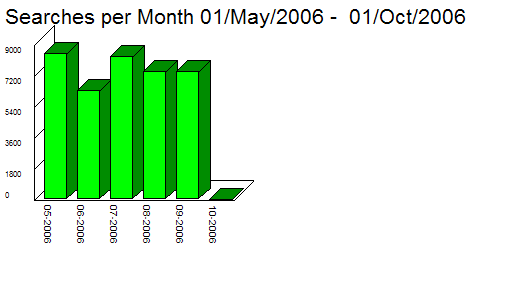
As you will all know, we also have a search engine on the COCP web site. Here are the some of the stats for September.


Saturday, September 30, 2006

Warwickshire Farewell

It is six years since, encouraged by the easy start-up of the Cornish 1891 project, I decided to run a similar project for the Warwickshire 1891 returns. At first, the project only covered the districts of Aston and Birmingham, because all my ancestral lines lived in Aston from 1845 onwards. But gradually, the project grew till it covered the whole of Warwickshire – 122 “pieces” that eventually produced about 780,000 records.

Each record has been transcribed, checked, validated and generally buffed up; finally being uploaded to Free Census and to the Warwickshire web site run by Pickard Trepess. Each piece was produced from a 3 or 4 fiche set, loaned to me by the Church of Latter-Day Saints of Jesus Christ – the LDS or Mormons. Transcribers, living anywhere from Hong Kong to Vancouver via Australia and New Zealand, transcribed the contents of the fiche set to produce a data file that was then sent to a checker. The checkers worked their way through the data, identifying and fixing errors. Finally, I validated the work, ending up with a data file for uploading to Free Census. This file also went to Pickard to convert to html for his web pages.

About 150 people worked on the project and a list will be published shortly. I would like to particularly mention Jeanagh Punter, who for several years worked as the project recruiter and Pickard, who not only produces the html files and hosts the web site, but for the early years was an invaluable help with “technical” issues. I do have another list, luckily a lot shorter, of those people who vanished with the microfiche set. I won’t publish that. An even sadder list is of the five people who died “in harness”; one of them only a couple of weeks ago. This last one, an Australian, had worked on the project from the very beginning. I owe him, and all the other the other volunteers, a great debt.

What now? First I shall cut a disc containing the data and send it to the Mormons, The National Archives and the Archive of Historical Data at the University of Essex. I might also send a copy to the various societies engaged in Warwickshire family history; although none of them have ever shown the slightest interest in the project. Then I shall settle down to a slow steady review of the lot – to try and eliminate some of the uncertainties and to incorporate the corrections that kind people have emailed in.

I am not going to do any more Warwickshire census returns, but I wish the organiser of the 1861 project all the best and hope that someone somewhere will be encouraged enough by my words to start up the 1871 project! Better than watching television!

Friday, September 29, 2006

Public Relations No 3

The Cornwall online Census Project aims to transcribe all the Cornish 19th century census returns and make them accessible online free of charge. You’ll find the complete 1841 and 1891 censuses for Cornwall already online at http://freepages.genealogy.rootsweb.com/~kayhin/ukocp.html as is 83 per cent of the 1851 census, 96 per cent of the 1861, 35 per cent of the 1871, and seven per cent of the 1881. There area also three pieces (donated and unchecked) for the 1901 census.

Most of the transcribed records are also available at http://www.freecen.org.uk/ – the Free Census Project site.

The Online Parish Clerk scheme began in Cornwall about five years ago and has spread to Cumberland & Westmorland, Devon, Dorset, Kent, Lancashire, Sussex, Warwickshire and Wiltshire. Volunteers adopt one or more parishes and collect family history information about the parishes, offering free ‘look-ups’ for researchers.

You can now search a combined database at http://www.cornwall-opc-database.org/ which contains around 330,000 records from the Cornish OPCs. At present, the information is mainly from Church of England parish registers, but Nonconformist registers and other records are expected to be included in the future.

Four volunteers are currently transcribing births, marriages and deaths from the 19th century West Briton and Cornwall Advertiser newspaper, plus court cases. Go to http://freepages.genealogy.rootsweb.com/~wbritonad/cornwall/intro.html to view the transcripts.


[Published in the October 2006 edition of Practical Family History magazine]

Public Relations No 2

Cornwall is an unusual English county, not least because many people will tell you that it is not English or a county! It is also unusual in that it is further advanced towards becoming fully online, as far as family history research is concerned. As the organiser of the Cornwall Online Census project I thought I would let other readers know what online resources are available to Cornish researchers.

At the centre of Cornish online research are the Cornish GENUKI pages (http://www.genuki.org.uk/big/eng/Cornwall/). These provide links to anything and everything to do with Cornish family history. The pages are organised on a hierarchical basis and lead to some 260 town and parish pages and some more general pages. Normally GENUKI aims to use the county and parishes as they were in 1850 but these Cornish pages also include new parishes created towards the end of the 19th century. The Cornish GENUKI pages are constantly being updated, so it is worth checking them frequently.

We started the Cornwall Online Census Project in the summer of 2000, transcribing the 1891 returns from fiche supplied by the LDS. Within 18 months the first returns were online having gone through the process of transcription, checking and validation. By 1st July this year the 1841 and 1891 censuses were complete along with 90 per cent of the 1851 & 1861; 40 per cent of the 1871; and ten per cent of the 1881). The aim of the project is to transcribe all the Cornish 19th census returns and place them online free-to-view at http://freepages.genealogy.rootsweb.com/~kayhin/ukocp.html.

We also have an online parish clerk scheme, which started in Cornwall about four years ago and has now spread to half a dozen other counties. Volunteers adopt a parish or parishes and seek to accumulate information and data about their parish. Their primary aim is to offer free “look ups” for researchers, using via the Cornish mailing lists. The OPC scheme has now launched its own searchable online “free-to-view” database (http://www.cornwall-opc-database.org/). Starting just over a month ago it already has over a quarter of a million records online. At present it is concentrating on Church of England registers, but its scope will expand to cover non-conformist registers and other types of data (burials for example).

There are two Cornish mailing lists. The main Cornish list, Cornish-L, is for all things Cornish, while Cornish-GEN is a list strictly for family history. The Cornish-L list is home to the famous (or infamous) virtual Christmas party! Details of how to subscribe can be found at Rootsweb.

[published in November 2006 edition of Family History Monthly]

Public Relations No 1

Hello folks

I have just managed to get pieces about Cornwall online activities published in two of the three main UK family history magazines. Both pieces will follow this one. The first one was published as a letter; the second as a small piece. Both pieces are edited versions of my text.

My aim in this is twofold. First of all - there is no point in our doing all this work, if no one knows about it. Secondly, it might recruit more people to help us in our great task.

My aim in publishing the pieces on here is to encourage you all to try your hand in your own countries. Most of the English speaking world now enjoys any number of paper and electronic FH magazines. You don't have to slavishly lift my words, feel free to edit or rewrite as you see fit. But do have a go.

Don't forget to let me know if you have any success.

Rgds

Michael